
2020 Chevrolet Bolt Ev: Recalls, Problems & MPG
Here are the deets on the 2020 Chevrolet Bolt Ev: 8 recalls, 174 owner complaints and up to 118 mpg combined.
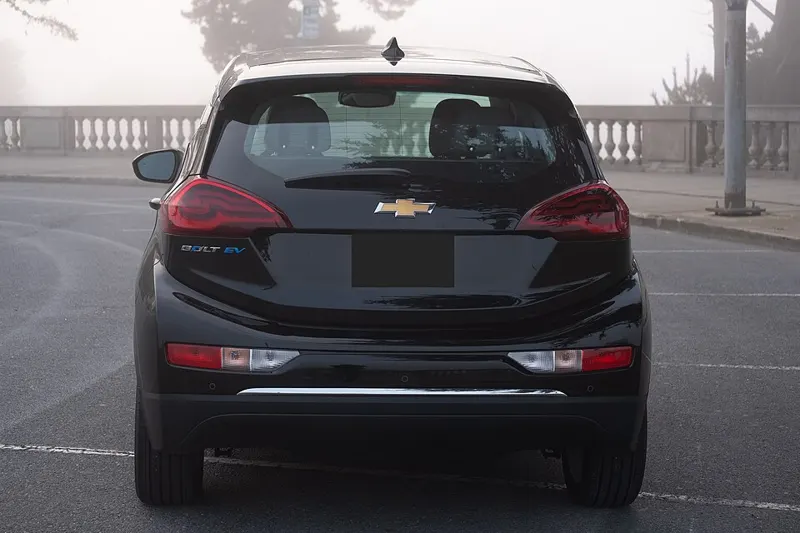
.jpg)
Recalls
8 vehicle recalls from the manufacturer. Repairs are free. Check your VIN to see if one is still open on your car.
Latches & locks Vehicle recall #20V184000 · 2020 · 897 vehicles
What's wrong: The door-handle cable inside the rear doors May be too long, allowing contact with the window when it is opened, possibly damaging the cable. A damaged cable May cause the rear door to open unintentionally when the rear window is opened. Additionally, it May cause the rear inside door handle to not work.
Why it matters: If the rear door opens while driving, or the door handle fails to open the rear door, there is an increased risk of injury to the rear passengers.
The fix: Gm will notify owners, and dealers will replace the rear inside door-handle cables, free of charge. The recall began April 17, 2020.
Brakes (hydraulic) Vehicle recall #20V808000 · 2020 · 464 vehicles
What's wrong: These vehicles May have an improperly cast front left brake caliper that can fracture during a high-pressure braking event.
Why it matters: If a brake caliper fractures and brake fluid is lost, the vehicle May experience reduced brake performance, increasing the risk of a crash.
The fix: Gm will notify owners, and dealers will inspect the casting lot number on the front left brake caliper and replace it if necessary, free of charge. The recall began January 29, 2021.
Seat belts, Seat belts Vehicle recall #20V811000 · 2020 · 470 vehicles
What's wrong: Incorrect bolts May have been used at one or more fastening locations to secure the seat belts to the vehicle. If an incorrect bolt was used, the seat belt May not be properly attached to the vehicle.
Why it matters: If a seat belt assembly is not properly attached to the vehicle, the seat belt May not properly restrain an occupant in the event of a crash, increasing the risk of injury.
The fix: Gm will notify owners, and dealers will replace the suspect bolts, free of charge. The recall began January 29, 2021.
Electrical Vehicle recall #21V650000 · 2021 · 52,414 vehicles
What's wrong: The high voltage battery could catch fire when charged to full or nearly full capacity.
Why it matters: A battery fire increases the risk of injury.
The fix: Owners are advised to take the following interim steps: set the target charge level feature in their vehicle to limit the charge level to 90%, charge their vehicle more frequently, avoid depleting the battery to 70 miles range remaining, park outside after charging, and do not charge the vehicle…
Seat belts, Body & structure Vehicle recall #22V930000 · 2022 · 111,242 vehicles
What's wrong: After a crash with seat belt pretensioner deployment, the pretensioner exhaust May ignite carpet fibers near the b-pillar, causing a fire.
Why it matters: A vehicle fire can increase the risk of injury.
The fix: Dealers will install metal foil at the carpet near the pretensioner exhaust, and install a pretensioner cover as necessary, free of charge. Owner notification letters were mailed between January 23, 2023 and April 25, 2023.
Seat belts, Body & structure Vehicle recall #23V845000 · 2023 · 6,771 vehicles
What's wrong: This recall includes certain vehicles previously repaired incorrectly under NHTSA recall number 22v-930. After a crash with seat belt pretensioner deployment, the pretensioner exhaust May ignite carpet fibers near the b-pillar, causing a fire.
Why it matters: A fire increases the risk of injury.
The fix: Dealers will inspect both front seat belt pretensioners and, if necessary, install metal foil at the carpet near the pretensioner exhaust. Certain vehicles will also need a pretensioner cover installed. Repairs will be performed free of charge. Owner notification letters were mailed January 24,…
Electrical Vehicle recall #24V481000 · 2024 · 72 vehicles
What's wrong: The advanced diagnostic software May have been incorrectly installed and fail to detect defective battery modules, possibly resulting in a battery fire.
Why it matters: A battery fire increases the risk of injury.
The fix: Owners are advised to take the following interim steps: set the target charge level feature in their vehicle to limit the charge level to 90%, charge their vehicle more frequently, avoid depleting the battery to 70 miles range remaining, park outside after charging, and do not charge the vehicle…
Electrical, Electrical Vehicle recall #24V812000 · 2024 · 107 vehicles
What's wrong: The installation of advanced diagnostic software May have failed. As such, the high voltage battery could catch fire when charged to full or nearly full capacity.
Why it matters: A battery fire increases the risk of injury.
The fix: Owners are advised to take the following interim steps: set the target charge level feature in their vehicle to limit the charge level to 90%, charge their vehicle more frequently, avoid depleting the battery to 70 miles range remaining, park outside after charging, and do not charge the vehicle…
Most-reported problems
Owner complaints filed with NHTSA, by component. One complaint can list several components. 4 mention a fire, 0 injuries and 0 deaths were reported.
What owners describe
- Electrical (94): the most common themes are electrical failure (68), fire / smoke (21), stalls / loses power (7).
- Fuel & propulsion (30): the most common themes are electrical failure (20), stalls / loses power (7), fire / smoke (5).
- Steering (22): the most common themes are steering problems (21), warning light on (6), noise or vibration (5).
- Other / unknown (21): the most common themes are electrical failure (4), stalls / loses power (3).
The 2020 Chevrolet Bolt Ev has 174 owner complaints, ranking #3 of 8 Bolt Ev model years for complaints (about average; the typical year has 123). Complaints peaked in 2023 (41 filed that year). The typical problem showed up when the car was about 2 years old, at a median of 5,800 miles. Neighboring years: 2019 (178 complaints, 6 recalls), 2021 (67 complaints, 5 recalls).
Engines & fuel economy (EPA)
| Engine | Transmission | Drive | City | Hwy | Comb. | Fuel |
|---|---|---|---|---|---|---|
| Electric (150 kW ACPM) | Automatic (variable gear ratios) | Front-Wheel Drive | 127e | 108e | 118e | Electricity |
Want the full repair deets? Get the factory manual.
Recall and complaint data tells you what goes wrong. A service manual tells you how to fix it: torque specs, wiring diagrams, fluid capacities and step-by-step procedures for the 2020 Chevrolet Bolt Ev.
Closest thing to the factory manual for most years. Pay once, keep it.
Most $25–$78, one-timePro-shop repair procedures, wiring diagrams and TSBs for your exact car.
From $19.99/mo · $39.99/yrOEM procedures, specs and recall/TSB info, the same source many shops use.
From $19.99/mo · $59.99/yrStep-by-step photos written from a real teardown. Great for first-timers.
Books ~$30–$40 · AllAccess $34.99/moHeads up: we may earn a commission if you buy through these links, at no extra cost to you. Prices checked 2026-10 and can change. We never host or link to pirated manuals. Disclosure
FAQ
Does the 2020 Chevrolet Bolt Ev have any recalls?
Yes. NHTSA lists 8 vehicle recalls for the 2020 Chevrolet Bolt Ev. Recall repairs are free at any dealer, no matter how old the car is. Check your VIN at nhtsa.gov/recalls.
What are the most common 2020 Chevrolet Bolt Ev problems?
Owners have filed 174 complaints with NHTSA. The most-reported areas are electrical (94), fuel & propulsion (30), steering (22).
What gas mileage does the 2020 Chevrolet Bolt Ev get?
EPA ratings run up to 118 mpg combined, across 1 engine and transmission combos.
Where can I get a 2020 Chevrolet Bolt Ev repair manual?
eManualOnline sells downloadable manuals, Mitchell 1 DIY and ALLDATAdiy sell online access to factory repair data, and Haynes sells printed guides and online access. Pick a download if you want to keep it, or a subscription for wiring diagrams and TSBs.