

2017 Ford F-150: Recalls, Problems & MPG
Here are the deets on the 2017 Ford F-150: 17 recalls, 1447 owner complaints and up to 22 mpg combined.
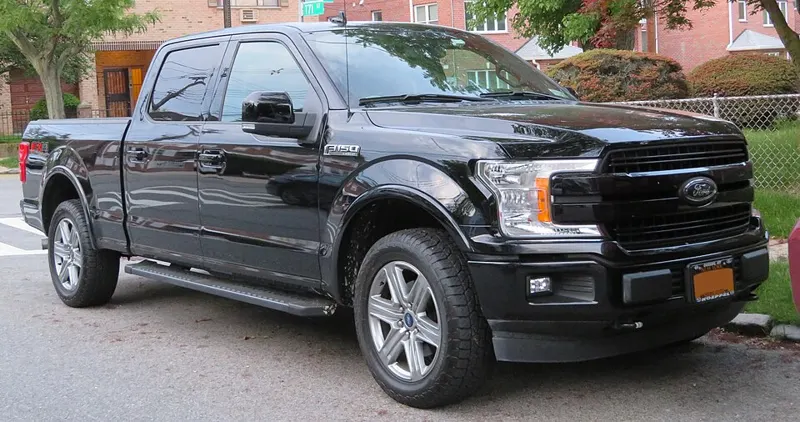
What buyers should know
- NHTSA lists 17 recalls for the 2017 Ford F-150. Recall repairs are done by dealers at no cost; confirm whether one is still open on a specific vehicle with the NHTSA recall lookup.
- Owners filed 1447 complaints with NHTSA, #10 of 37 model years in our data. Most-reported components: Transmission & drivetrain (545), Engine (313), Other / unknown (161).
- The typical reported problem came when the vehicle was about 6 years old, at a median of 52,500 miles.
- Complaints are unverified owner reports. Totals also depend on how many were sold and how long they have been on the road, so they are not a reliability rating on their own.
Source: NHTSA recall and complaint data as of October 16, 2026.
 Recalls
17 vehicle recalls from the manufacturer, plus 1 equipment/tire recall that can apply. Repairs are done at no cost. Check your VIN to see if one is still open on your car.
Electrical, Transmission & drivetrain Vehicle recall #17V053000 · 2017 · 6,792 vehicles
Show details
What's wrong: Affects vehicles equipped with an eight-inch productivity screen. In these vehicles, the instrument cluster may lose power after the initial vehicle start-up in cold ambient temperatures. Several gauges, including the transmission gear position indicator, may not illuminate. As such, these vehicles fail to comply with the requirements of federal motor vehicles safety standard (fmvss) number 102, "transmission shift…
Why it matters: If the transmission gear position indicator fails to illuminate, the driver may be unable to tell the transmission shift position, increasing the risk of a crash or injury from unintended vehicle movement.
The fix: Ford will notify owners, and dealers will reprogram the instrument cluster, free of charge. The recall began February 20, 2017.
Latches & locks, Body & structure Vehicle recall #17V331000 · 2017 · 14,410 vehicles
Show details
What's wrong: Affects vehicles equipped with a chrome exterior door handle cover accessory kit purchased from a Ford dealer. These accessory door handle covers may cause the doors to unlatch in a side impact collision. As such, these vehicles may fail to comply with the requirements of Federal Motor Vehicle Safety Standard (fmvss) number 206, "door locks and door retention components."
Why it matters: If the doors unlatch and open in a side impact collision, the occupants have an increased risk of injury.
The fix: Ford will notify owners, and dealers will remove the accessory covers and refund the purchase price. The recall began July 13, 2017.
Seats Vehicle recall #17V332000 · 2017 · 2,204 vehicles
Show details
What's wrong: Affects vehicles equipped with a manual driver's seat back recliner mechanism. In the event of a crash, the seat back frame may not restrain the occupant due to having inadequate welds. As such, these vehicles may not meet the requirements of Federal Motor Vehicle Safety Standard (fmvss) numbers 202a, "head restraints" and 207, "seating systems."
Why it matters: If the occupant is not adequately restrained in the event of a crash, they have an increased risk of injury.
The fix: Ford will notify owners, and dealers will inspect and, if necessary, replace the seat back frame, free of charge. The recall began on June 7, 2017.
Seat belts Vehicle recall #17V526000 · 2017 · 117,423 vehicles
Show details
What's wrong: Affects vehicles equipped with a crew cab. The left rear inflatable seat belt buckle assembly may be inadequately attached to its mounting bracket. As such, these vehicles fail to comply with the requirements of Federal Motor Vehicle Safety Standard (fmvss) number 210, "seat belt assembly anchorages."
Why it matters: If the left rear inflatable seat belt buckle separates from it's mounting bracket, the seat occupant may not be adequately restrained, increasing their risk of injury.
The fix: Ford will notify owners, and dealers will inspect the seat belt assembly, replacing the attaching rivet as necessary, free of charge. Interim notices informing owners of the safety risk were mailed October 18, 2017. Owners will receive a second notice when the remedy becomes available.
Airbags Vehicle recall #17V529000 · 2017 · 650 vehicles
Show details
What's wrong: The air bag inflator within the passenger frontal air bag module may rupture in the event of a crash.
Why it matters: An inflator rupture may result in metal fragments striking the vehicle occupants resulting in serious injury or death.
The fix: Ford will notify owners, and dealers will replace the passenger frontal air bag module, free of charge. The recall began October 11, 2017.
Seats, Seat belts Vehicle recall #17V599000 · 2017 · 504 vehicles
Show details
What's wrong: The seat belt anchor may not be adequately welded to the seat cushion frame. As such, these vehicles fail to comply with the requirements of Federal Motor Vehicle Safety Standard (fmvss) number 210, "seat belt assembly anchorages," and 207, "seating systems."
Why it matters: The seat belt buckle weld may fail, preventing the occupants from being properly restrained in the event of a crash, increasing the risk of injury.
The fix: Ford will notify owners, and dealers will replace the front passenger manual seat track, free of charge. The recall is expected to begin November 6, 2017.
Latches & locks Vehicle recall #17V652000 · 2017 · 1,101,107 vehicles
Show details
What's wrong: The doors on these vehicles may have a bent or kinked actuation cable or the door latches may freeze after water gets into the latch. Either condition can result in the doors opening while driving although they appear to be closed.
Why it matters: A door that opens while driving can increase the risk of injury.
The fix: Ford will notify owners, and dealers will inspect the door latch actuation cables and repair if necessary, and install water shields over the door latches, free of charge. The recall began October 12, 2018.
Transmission & drivetrain Vehicle recall #17V671000 · 2017 · 11,783 vehicles
Show details
What's wrong: Affects vehicles equipped with ten-speed transmissions. The pin that attaches the transmission shift linkage to the transmission may come out, preventing the transmission from responding to movement of the shift lever.
Why it matters: The disconnected linkage may cause the vehicle to not move forward or backward as selected by the driver with the shift lever. Additionally, despite selecting 'park', if the parking brake is not applied, the vehicle may roll. Either scenario increases the risk of a crash.
The fix: Ford will notify owners, and dealers will replace the roll pin with an updated part, free of charge. The recall is expected to begin December 2017.
Transmission & drivetrain Vehicle recall #18V213000 · 2018 · 142 vehicles
Show details
What's wrong: Affects vehicles equipped with 10-speed automatic transmissions. A roll pin may not have been installed in the transmission, potentially causing a loss of the "park" function.
Why it matters: Despite the transmission shift lever being placed in 'park' and the instrument panel display indicating 'park,' the vehicle may roll away after it has been exited if the parking brake has not been applied, increasing the risk of injury or a crash.
The fix: Ford will notify owners, and dealers will inspect the transmission to make sure it has the roll pin, installing one if it is missing, free of charge. The recall began on April 13, 2018.
Seat belts, Body & structure Vehicle recall #18V568000 · 2018 · 1,619,112 vehicles
Show details
What's wrong: If a front seat belt pretensioner deploys as the result of a crash, the sparks may ignite materials such as carpeting or insulation within the b-pillar area.
Why it matters: A vehicle fire could result if materials ignite inside the vehicle.
The fix: Ford will notify owners, and dealers will remove the b-pillar insulation material and wiring harness tape, and install heat resistant tape, free of charge. The recall began September 28, 2018.
Engine Vehicle recall #18V894000 · 2018 · 410,289 vehicles
Show details
What's wrong: Affects vehicles equipped with an engine block heater. Water and contaminants may get into the block heater cable's splice connector causing corrosion and damage.
Why it matters: When the heater is plugged in, prolonged corrosion could cause a resistive short, increasing the risk of overheated or melted wiring which can increase the risk of a fire.
The fix: Ford will notify owners, and dealers will disable the block heater cable, free of charge. Once parts are available, dealers will replace the engine block heater cable, free of charge. The recall began June 3, 2019.
Engine, Equipment Vehicle recall #19V278000 · 2019 · 131,068 vehicles
Show details
What's wrong: Affects vehicles equipped with an engine block heater and previously remedied under recall 18V894. During the previous repair, the block heater cable's splice connector may have been damaged.
Why it matters: A damaged cable could cause a resistive short, increasing the risk of overheated or melted wiring, increasing the risk of a fire.
The fix: Ford will notify owners, and dealers will disable the engine block heater from being used. When replacement cables become available, a second notice will be mailed and dealers will replace the engine block heater cord, free of charge. The recall began May 31, 2019.
Brakes (hydraulic) Vehicle recall #20V332000 · 2020 · 292,311 vehicles
Show details
What's wrong: Affects vehicles equipped with 3.5L ecoboost engines. The brake master cylinder may leak brake fluid into the brake booster.
Why it matters: A loss of brake fluid may result in a change in brake pedal travel and feel, increased pedal effort and reduced front brake function, possibly requiring greater effort and distance to stop the vehicle. These conditions can increase the risk of a crash.
The fix: Ford will notify owners, and dealers will replace the brake master cylinder and inspect the brake booster, replacing it as necessary, free of charge. Ford issued owners an interim notification on June 30, 2020. The recall began on October 28, 2020.
Brakes (hydraulic) Vehicle recall #22V150000 · 2022 · 195,864 vehicles
Show details
What's wrong: Affects vehicles equipped with 3.5L ecoboost engines. The brake master cylinder may allow brake fluid to leak from the front wheel circuit into the brake booster.
Why it matters: A loss of brake fluid may result in a change in brake pedal travel, increased pedal effort and reduced front brake function, requiring greater effort and distance to stop the vehicle. These conditions can increase the risk of a crash.
The fix: Dealers will replace the brake master cylinder. If the master cylinder is leaking, the brake booster will also be replaced. Repairs will be performed free of charge. An interim owner notification letter notifying customers of the safety defect were mailed on April 29, 2022. Owner notification…
Brakes (hydraulic) Vehicle recall #25V236000 · 2025 · 123,611 vehicles
Show details
What's wrong: The brake master cylinder may allow brake fluid to leak from the front wheel circuit into the brake booster.
Why it matters: A brake fluid leak can cause reduced brake function and extend the distance required to stop, increasing the risk of a crash.
The fix: Dealers will replace the brake master cylinder. If the master cylinder is leaking, the brake booster will also be replaced. Repairs will be performed free of charge. Owner notification letters were mailed September 25, 2025.
Transmission & drivetrain Vehicle recall #26V237000 · 2026 · 1,392,935 vehicles
Show details
What's wrong: A loss of signal between the transmission range sensor and the powertrain control module can cause the transmission to unexpectedly downshift into second gear.
Why it matters: Unexpectedly downshifting into second gear may result in a loss of vehicle control, increasing the risk of a crash.
The fix: Dealers will update the powertrain control module software, free of charge. Owner notification letters were mailed July 24, 2026.
Electrical Vehicle recall #26V370000 · 2026 · 4,445 vehicles
Show details
What's wrong: The instrument cluster may lose power after initial vehicle start-up in cold ambient temperatures. Several gauges, including the transmission gear position indicator, may not illuminate. As such, these vehicles fail to comply with the requirements of Federal Motor Vehicle Safety Standard number 102, "transmission shift lever sequence, starter interlock, and transmission braking effect."
Why it matters: An instrument cluster that fails to display critical safety information, such as gear position or warning lights, increases the risk of a crash or injury.
The fix: Dealers will update the instrument panel cluster assembly (ipc) software, free of charge. Owner notification letters were mailed July 17, 2026.
1 aftermarket equipment / tire recall replacement parts sold to fit this car, not the car itselfSuspension Equipment recall #21E027000 · 2021 · 2,394 vehicles
Show detailsShow details
What's wrong: The ball joint may have a misaligned dust boot and may be missing alignment hole and installation warning tag, which may lead to improper alignment of the ball joint.
Why it matters: An incorrectly installed ball joint may cause the ball joint stud to break, which can compromise front wheel control, increasing the risk of a crash.
The fix: Driv will notify owners, and dealers will inspect, and if necessary replace the ball joint, free of charge. Owner letters were mailed May 5, 2021.
Suspension Equipment recall #21E027000 · 2021 · 2,394 vehicles
Show detailsShow details
What's wrong: The ball joint may have a misaligned dust boot and may be missing alignment hole and installation warning tag, which may lead to improper alignment of the ball joint.
Why it matters: An incorrectly installed ball joint may cause the ball joint stud to break, which can compromise front wheel control, increasing the risk of a crash.
The fix: Driv will notify owners, and dealers will inspect, and if necessary replace the ball joint, free of charge. Owner letters were mailed May 5, 2021.
Show details
What's wrong: The ball joint may have a misaligned dust boot and may be missing alignment hole and installation warning tag, which may lead to improper alignment of the ball joint.
Why it matters: An incorrectly installed ball joint may cause the ball joint stud to break, which can compromise front wheel control, increasing the risk of a crash.
The fix: Driv will notify owners, and dealers will inspect, and if necessary replace the ball joint, free of charge. Owner letters were mailed May 5, 2021.
 Most-reported problems
Owner complaints filed with NHTSA, by component. One complaint can list several components. Complaint reports mention 21 fires, 34 injuries and 0 deaths. These are owner reports, not confirmed causes.
What owners describe
- Transmission & drivetrain (545): the most common themes are hard / delayed shifting (398), warning light on (142).
- Engine (313): the most common themes are warning light on (113), noise or vibration (113), stalls / loses power (49).
- Other / unknown (161): the most common themes are fire / smoke (15).
- Electrical (134): the most common themes are electrical failure (39), warning light on (24).
The 2017 Ford F-150 has 1447 owner complaints, ranking #10 of 37 F-150 model years for complaints (about average; the typical year has 1025). Complaints peaked in 2025 (280 filed that year). The typical problem showed up when the car was about 6 years old, at a median of 52,500 miles. Neighboring years: 2016 (2069 complaints, 13 recalls), 2018 (2316 complaints, 18 recalls).
How the 2017 F-150 compares
Recalls vs. other years: 6 of its 18 recall campaigns are listed only for the 2017 among the F-150 years we cover: #17V053000 (Electrical, Transmission & drivetrain), #17V332000 (Seats), #17V529000 (Airbags), #17V599000 (Seats, Seat belts), #17V671000 (Transmission & drivetrain), #26V370000 (Electrical). The other 12 campaigns also cover other F-150 years: #18V894000 (Engine) also covers 2015–2016, 2018–2019; #19V278000 (Engine, Equipment) also covers 2015–2016, 2018–2019; #18V568000 (Seat belts, Body & structure) also covers 2015–2016, 2018; #20V332000 (Brakes (hydraulic)) also covers 2014–2016; #21E027000 (1 aftermarket equipment / tire recall) also covers 2015–2016, 2018; #17V331000 (Latches & locks, Body & structure) also covers 2015–2016; 6 more are shared too.
Most-reported areas vs. neighboring years (owner complaints to NHTSA by component):
- Transmission & drivetrain: 545 for the 2017; 2016: 595; 2018: 1014
- Engine: 313 for the 2017; 2016: 317; 2018: 507
Other 2017 Ford models under the same campaigns: F-250 Sd (5 shared), Expedition (2 shared), Explorer (1 shared), Mustang (1 shared). NHTSA lists these models in at least one of the same recall campaigns, so the recall details above may also apply to them.
Worked out from the NHTSA recall and complaint data as of October 16, 2026 shown on each MotorDeets model-year page. Recall coverage is by model year as NHTSA lists it; check a specific vehicle by VIN.
 Check a VIN: vehicle history report
Shopping for a used 2017 Ford F-150? Run the 17-character VIN to see title records, salvage and junk history, odometer readings and past sales before you buy.
The VIN is on the driver-side dashboard (seen through the windshield), the door jamb sticker, or the title and registration. Reports are provided by VinAudit, which opens in a new tab. Heads up: we may earn a commission if you buy a report, at no extra cost to you. Disclosure
 Read your check-engine codes
Check engine light on? An OBD2 scanner reads the trouble codes your 2017 Ford F-150 has stored, so you can see what the car is reporting before you visit a shop. These work on most 1996-and-newer cars and light trucks.
Code readers and diagnostic scanners for most 1996-and-newer cars and light trucks.
Reads and clears check-engine codes and shows emissions readiness. Plugs in, no app needed. About $59 at Autelonline.
Everything the AL319 does, plus a 12V battery and charging-system tester. About $93 at Autelonline.
Goes past engine codes to ABS, airbag, transmission and other modules, with service resets. About $275 at Autelonline.
Heads up: we may earn a commission if you buy through these links, at no extra cost to you. A scanner shows codes, not a repair. Open recalls are fixed by dealers at no cost. Prices were checked in October 2026 and can change. Disclosure
 Engines & fuel economy (EPA)
| Engine | Transmission | Drive | City | Hwy | Comb. | Fuel |
|---|---|---|---|---|---|---|
| 2.7 L 6-cyl turbo | Automatic (S6) | Rear-Wheel Drive | 19 | 26 | 22 | Regular |
| 3.5 L 6-cyl turbo | Automatic (S10) | Rear-Wheel Drive | 18 | 25 | 21 | Regular |
| 3.5 L 6-cyl | Automatic 6-spd | Rear-Wheel Drive | 18 | 24 | 20 | Gasoline or E85 |
| 2.7 L 6-cyl turbo | Automatic (S6) | Part-time 4-Wheel Drive | 18 | 23 | 20 | Regular |
| 3.5 L 6-cyl turbo | Automatic (S10) | Part-time 4-Wheel Drive | 17 | 23 | 20 | Regular |
| 3.5 L 6-cyl | Automatic 6-spd | Part-time 4-Wheel Drive | 17 | 23 | 19 | Gasoline or E85 |
| 5.0 L 8-cyl | Automatic (S6) | Rear-Wheel Drive | 15 | 22 | 18 | Gasoline or E85 |
| 5.0 L 8-cyl | Automatic (S6) | Part-time 4-Wheel Drive | 15 | 21 | 17 | Gasoline or E85 |
 Want the full repair deets? Get the factory manual.
Recall and complaint data tells you what goes wrong. A service manual tells you how to fix it: torque specs, wiring diagrams, fluid capacities and step-by-step procedures for the 2017 Ford F-150.
Closest thing to the factory manual for most years. Pay once, keep it.
Most $25–$78, one-timePro-shop repair procedures, wiring diagrams and TSBs for your exact car.
From $19.99/mo · $39.99/yrOEM procedures, specs and recall/TSB info, the same source many shops use.
From $19.99/mo · $59.99/yrStep-by-step photos written from a real teardown. Great for first-timers.
Books ~$30–$40 · AllAccess $34.99/moHeads up: we may earn a commission if you buy through these links, at no extra cost to you. Prices checked 2026-10 and can change. We never host or link to pirated manuals. Disclosure
 FAQ
Does the 2017 Ford F-150 have any recalls?
Yes. NHTSA lists 17 vehicle recalls for the 2017 Ford F-150, plus 1 equipment or tire recalls that can apply. Recall repairs are done at no cost at any dealer, no matter how old the car is. Check your VIN at nhtsa.gov/recalls.
What are the most common 2017 Ford F-150 problems?
Owners have filed 1447 complaints with NHTSA. The most-reported areas are transmission & drivetrain (545), engine (313), other / unknown (161).
What gas mileage does the 2017 Ford F-150 get?
EPA ratings run up to 22 mpg combined (2.7 L, Automatic (S6)), across 8 engine and transmission combos.
Where can I get a 2017 Ford F-150 repair manual?
eManualOnline sells downloadable manuals, Mitchell 1 DIY and ALLDATAdiy sell online access to factory repair data, and Haynes sells printed guides and online access. Pick a download if you want to keep it, or a subscription for wiring diagrams and TSBs.
 Other F-150 years


